Designing Systems
French Vanilla Iced Coffee
What does being a member of Rewriting the Code mean to you?
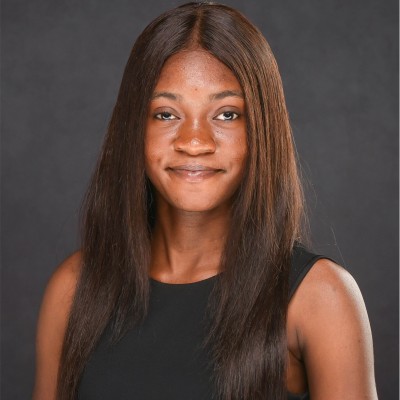
Being a member of Rewriting the Code means having a community that sees me fully , not just as a student, but as a builder, a thinker, and a woman finding her place in tech. It means I don’t have to shrink myself or prove that I belong before I’ve even gotten started. For me, RTC is proof that the industry can be different, and being part of that gives me both the courage and the accountability to build things that actually matter.
You're studying CS at Grambling State, competing in trading challenges, fellowshipping with Break Through Tech, and building Beyond the Code all at the same time. What does a typical week actually look like for you?
Honestly, a typical week is a lot of pivoting. I might be deep in a data structures assignment in the morning, in a fellowship meeting by afternoon, and planning out Beyond the Code’s onboarding flow at night. I’ve learned to treat my energy the same way Beyond the Code does: some days are for deep focus work, some are for collaboration and community, and I’ve stopped feeling guilty about knowing the difference. It’s not always pretty, but it’s purposeful, and every piece of it feeds into who I’m becoming as a builder and as a person.
What first drew you to computer science, and did you always know it was the direction you wanted to go?
I wouldn’t say I always knew , it was more of a slow realization that the things I naturally loved, solving problems, understanding systems, creating things from nothing, all pointed here. What really locked it in was discovering that code wasn’t just a technical skill but a form of power: the ability to build something that didn’t exist before and put it in someone’s hands. Once I understood that, there was no going back.
Can you explain your Beyond the Code project? What was the moment you decided this needed to exist?
Beyond the Code is an AI-powered cycle and daily planning app built specifically with PCOS in mind. It takes your cycle signals and turns them into personalized energy-based task recommendations, so your schedule actually works with your body instead of against it. It’s not just a tracker; it has a conversational AI you can ask real reproductive health questions, a planner, a period calendar, and it learns your patterns over time. The moment I decided it needed to exist was when I realized that most cycle apps were built around a perfect 28-day cycle, which means women with PCOS whose cycles can be unpredictable, long, or irregular were being handed a tool that was never really designed for them.
Building a tool designed specifically around women's bodies and cycles is a deeply intentional choice. How do you think about who you're building for when you're making design decisions?
I think about the woman who has been told her symptoms are normal when they’re not, who has tried five different apps and still feels like an afterthought in her own health journey. Every design decision I make from the onboarding questions to the way Beyond the Code phrases its insights is filtered through the question: does this feel like it was built for her, or does it feel like she was an afterthought? I want Beyond the Code to feel like a friend who actually understands your body, not a clinical tool that makes you feel like a data point.
A lot of health tech is built without women's lived experience at the center. What responsibility do you feel as someone who's changing that?
I feel a deep responsibility to get it right, not just technically, but humanly. When you’re building for a community that has historically been dismissed or misrepresented in healthcare, you don’t get to be careless with their data, their experiences, or their trust. I also feel responsible for making space for other women in tech who want to build with the same intentionality, because Beyond the Code is one project, but the bigger shift happens when more of us are in the room making these decisions.