Human-centric wellness tech and AI-driven accessibility
Coconut milk latte with sugar-free vanilla
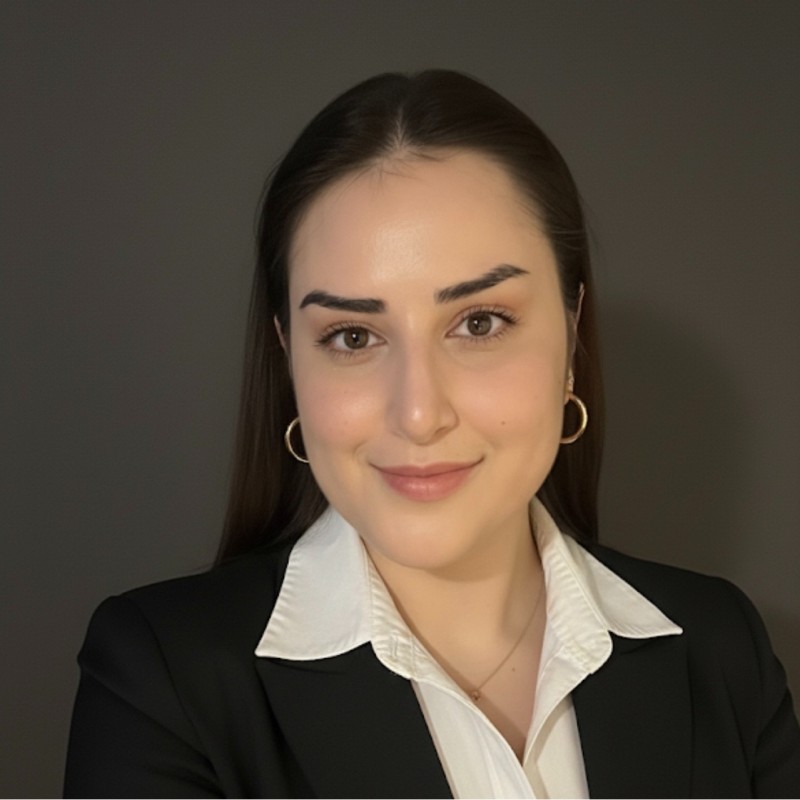
What does being a member of Rewriting the Code mean to you?
Being a member of Rewriting the Code means having a global sisterhood that stands behind you when you decide to redefine your path. Since I joined in 2021, RTC has represented a safe space where professional ambition meets genuine support. To me, it is more than just a networking platform. It is a source of empowerment that proves your potential is not limited by your geography or the challenges you face. Whether I am navigating technical complexities as an Android Developer or managing a significant life transition, being part of this community reminds me that I am part of a collective movement of resilient women who are truly rewriting the rules of the tech industry.
You've built your career across mobile, backend, and community leadership. What thread runs through all of it for you?
The consistent thread throughout my career is the desire to build bridges between complex systems and human needs. Whether I am developing an intuitive user interface for a mobile app or architecting a robust backend infrastructure, my goal is always to create a seamless experience that empowers the user. Community leadership is a natural extension of this mindset. It allows me to apply the same architectural thinking to human networks. I believe that technology is only as powerful as the connection it fosters. This drive to simplify complexities and provide meaningful support is what now leads me toward mental health coaching. I want to continue being a bridge for others as they navigate their own professional and personal systems.
From Istanbul to Kennedy Leadership University to the Netherlands, your life and career have been genuinely global. How have those three very different places shaped the way you see yourself, the tech industry, and the work still left to do?
My life and career have been shaped by a blend of diverse cultural experiences and a commitment to international education. Istanbul provided me with a strong foundation as a Computer Engineer and taught me how to be resilient and resourceful in a fast paced environment. My Space MBA from Kennedy Leadership University further expanded my horizons, showing me that the tech industry should always aim for the stars and think on a global, multi generational scale. Working across different borders and collaborating with international teams has helped me realize that while technology is a universal language, the human experience behind it is beautifully diverse. These experiences together have shaped me into a professional who values global collaboration over local competition. I see the tech industry as a powerful tool for connection, but I also believe there is significant work left to do in making it truly inclusive and accessible for everyone. My focus is now on ensuring that we do not leave anyone behind, especially those navigating personal health challenges. We need to build a tech world that is as resilient and adaptable as the people who live in it.
You hold certifications from Google, Girls with Impact, the European Business University, and Cornell University, in addition to your engineering work. What drives you to keep expanding how you're trained to think?
My drive to keep expanding my training comes from a fundamental belief that complex problems cannot be solved with a single lens. As a Computer Engineer, I have the technical tools to build systems, but my certifications from institutions like Google, Girls with Impact, the European Business University, and Cornell University have taught me how to lead, innovate, and build ventures from the ground up. I see every new certification as an upgrade to my mental operating system. The tech industry moves at a rapid pace, but human needs evolve even faster. My focus on Women’s Entrepreneurship at Cornell, in particular, showed me the power of combining personal readiness with true customer discovery. By diversifying how I think, I am able to remain adaptable and resilient. My recent transition into mental health coaching is the latest iteration of this growth. I want to combine my analytical engineering mindset with entrepreneurial strategy and psychological empathy. For me, learning is not just about staying relevant in the tech market. It is about becoming a more complete professional who is capable of providing meaningful, human centric solutions for a world that is constantly changing.
As a #IamRemarkable facilitator, you help people recognize and own their achievements. Is there a moment when you had to apply that same practice to yourself?
Yes, absolutely. It is often much harder to practice self advocacy than it is to teach it. The most profound moment I had to apply the #IamRemarkable philosophy to my own life happened very recently, following my resignation from a toxic work environment and my subsequent Multiple Sclerosis diagnosis. When your health forces you to pause and you lose the professional title you worked so hard for, it is easy to feel like your previous achievements have vanished. I found myself in a place where my physical energy was low, and my career path was suddenly uncertain. I had to intentionally sit down and remind myself that protecting my boundaries and choosing my well being was a massive accomplishment in itself. I had to own the fact that choosing to rebuild my career, establishing my initiative The Growth Studio, and dedicating my focus to human centric technology and wellness while navigating a chronic illness is not a setback. It is a profound display of resilience. Applying the #IamRemarkable practice to myself in that dark moment taught me that being remarkable is not just about the code you write or the degrees you hold. It is about the courage to rewrite your own story when life forces you to change your operating system.
What's a comfort show, playlist, or corner of the internet you return to when you need to fully switch off?
When I need to fully switch off from complex problem solving, I lean into a mix of lighthearted comedy and engaging crime dramas. My ultimate comfort shows are Modern Family, Superstore, The Office, and Rizzoli & Isles. There is something incredibly grounding about watching these familiar dynamics play out, whether it is everyday workplace humor or solving a gripping mystery alongside strong female characters. It is the perfect antidote to a highly structured and serious day. As for my internet corner, I am someone who curates a Spotify playlist for literally every occasion you can think of. However, when I want to completely disconnect and instantly boost my mood, my ultimate go to is always a playlist filled with 2000s pop songs. That specific era of music brings a sense of nostalgia and pure, unfiltered energy that perfectly resets my mind.
You've continued to build, lead, and show up for the community while navigating MS. What has that experience taught you about resilience, your relationship with your work, and what truly matters to you?
Navigating an MS diagnosis has fundamentally redefined my understanding of resilience. I used to believe that resilience meant enduring difficult situations or pushing through toxic work environments at all costs. My diagnosis taught me that true resilience is actually the courage to pause, set radical boundaries, and protect your peace. It is the strength to rebuild your life on your own terms. This experience has completely transformed my relationship with work. I no longer attach my identity or self worth to a specific job title or corporate hustle. Instead, my focus has shifted to intentional creation. This realization is exactly what led me to found The Growth Studio and begin developing projects focused on human centric technology, like my upcoming app Zentra. I now view my engineering work not as a place to exhaust my energy, but as a powerful platform to channel my experiences into accessible tools that support others. Ultimately, this journey has clarified what truly matters to me. Prestige has taken a back seat to authenticity, health, and community impact. What matters most is using my technical background to build systems that foster wellness, and showing others in the chronic illness community that a life altering diagnosis is not the end of a career. It can actually be the catalyst for discovering your most authentic and purposeful professional self.
What does "accessible technology" actually mean to you in practice, not just as a principle?
Before navigating a chronic illness, I viewed accessible technology mostly as a technical checklist of screen readers, font sizes, and color contrasts. Today, in practice, accessible technology means designing for fluctuating human capacity. Living with an unpredictable condition like MS has taught me that a user’s physical and cognitive energy can change drastically from day to day. In practice, accessibility means building tools that do not punish users for having a low energy day. As I develop Zentra, my upcoming habit and wellness tracker, accessibility means creating a user experience that is gentle on a fatigued mind. It means allowing people to engage with the app in micro steps, providing value without demanding perfection or a heavy cognitive load. Truly accessible technology adapts to the user’s daily reality, rather than forcing the user to adapt to the system. It is about building digital spaces where people feel supported exactly as they are.