
In case you don’t know me well enough, I am extremely (emphasis on extremely) shy and stubbornly independent.
Growing up, I learned that my culture rejects vulnerability. Perceived perfection made people stronger and more beloved, while asking for any kind of support was a sign of desperation and weakness. As a result, I have had this perception of myself as an oracle of answers and a pillar of support. There was no way I was ever going to subject myself to asking others for help.
Spoiler alert: I subjected myself to asking others for help.
Can I say it? College was confusing. Students who seemed to excel in their classes were the ones who asked questions in class, camped out during office hours, and collaborated with other students. Even if they were corrected for not having the right answers, those who spoke up had a better time understanding course content. On top of that, some professors graded participation in class discussions! That’s right, my grade was based on how I spoke. I would’ve expected that kind of rubric from a linguistics-related class, but why did participation matter in Computer Science classes?
I realized quickly that I had to change the way I approached my education if I wanted to learn and succeed. There was just one problem though…I thought class participation was reserved for people who weren’t…well…reserved. People who spoke up in class must not have thought about worst-case scenarios like I do, scenarios like, “What if my question is too obvious?” “What if everyone already knows the answer, and I’m just wasting everyone’s time?” “What if people start to wonder how someone like me even got admitted here?” However, remember what I said before: “even if they were corrected for not having the right answers, those who spoke up had a better time understanding course content.” I struggled a lot in the classes where I stayed silent, so something had to change. What was I more afraid of, not taking enough advantage of my college education, or…talking?
As a Computer Science student, naturally it makes sense to solve this kind of problem logically. Richard Feynman once said, “If you’re the smartest person in the room, then you’re in the wrong room.” If you approach classes with a curious mindset, as opposed to the need to be correct, every question you ask is an opportunity to leave the classroom with more than you came in with. And think about it this way: if the knowledge you gained when you leave class > the knowledge you had when you walked in, then your college education is giving you a positive return on your investment.
Don’t believe me? Well, what if I said I learned more from being a teaching assistant for the introductory Computer Science class I helped with than when I took the class?
As a student, sometimes you tend to prioritize grades over learning to maintain a steady GPA. But, as a TA, you have to shift your focus towards helping others understand what you already know. I was challenged to explain an idea differently and fill the gaps in my own understanding. Asking questions in my lab was an invitation for me to learn along with my students, and for both of us to grow.
Questions started being less intimidating for me when I realized I was helping others along with myself. So, if you’re like me, and you’re terrified of raising your hand in a 100-person class because you think you might be “inconveniencing the class” or “wasting their time”, try changing your perspective. Your question helps your professor reinforce course content. Your question helps students who already know the answer confirm their understanding. And, as an added bonus, your question helps students who were too afraid to ask the same thing. Every time you raise your hand, you’re actually asking everyone in that entire room, “Do you want to become smarter with me?”

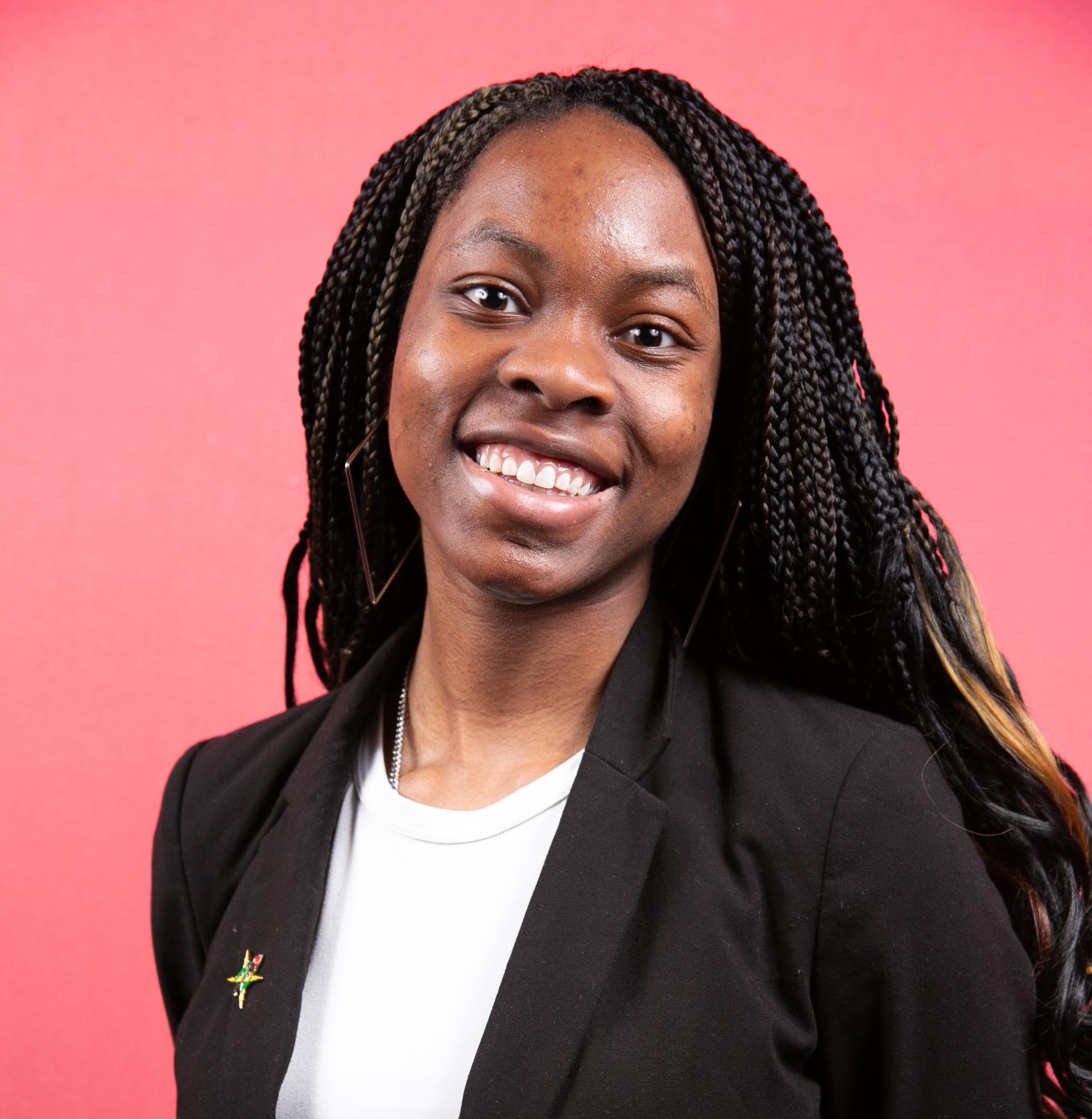
Paula Sefia
Paula Sefia is a TechStart Associate at Liberty Mutual Insurance. In April 2026, she graduated Summa Cum Laude in Computer Science and Cognitive Psychology from Northeastern University. She has been a member of Rewriting the Code since her freshman year of college, and she loves to provide mentorship and guidance to students who wish to pursue an interest or career in tech.