
If you’re reading this between coding challenges, rejection emails, or your third coffee (or boba) of the day, we see you. University life places an unsustainable workload on tech students, which is why so many feel overwhelmed.
The core problem isn’t student ability, it’s the unreasonable expectations placed on tech candidates.
You are good enough.
Women in our 2025 recruiting experience report cited spending over 12 hours preparing just for technical interviews, and only 32% felt prepared.
📌 Hours invested per application × number of applications = total exhaustion.
Before we dive into the data we found in our recruiting experience report, take a moment to acknowledge everything you’ve already pushed through this year.
The Overwhelming Workload
The numbers don’t lie. You are applying to more jobs than ever before. Median applications are 62 for interns and 40 for new grads, but averages hover above 110. But that doesn’t always translate to an internship.
The biggest barriers cited in our report include:
- Not getting interviews
- Technical challenges
- Lack of experience
So it becomes a cycle. You tweak your resume, apply again, maybe hear back, and suddenly you’re juggling hours of interview prep all over again.
“Interview prepping almost always means deprioritizing something else that’s equally important. At times, it feels like an impossible task.”
All of this on top of your school work, your hobbies, your friends, your life.
You’re exhausted.
We hear you, and we see you.
This is not a personal failure, but a structural, systemic one.
Decision Fatigue is Real
All of these pressures build on each other, making even simple decisions feel heavier than they should.
Decision fatigue is the “state of mental overload that can impede a person’s ability to continue making decisions,” according to the American Medical Association. And it’s a real thing that has real effects, including brain fog, exhaustion, and more.
The recruiting lifecycle doesn’t end once you’ve completed your internship. You have so many decisions to make, especially if you’ve received a return offer. A return offer is when a company wants you back (for either another internship or for a full-time position). Oftentimes, though, this offer has a 2-week turnaround, and suddenly, you have to make some big decisions fast.
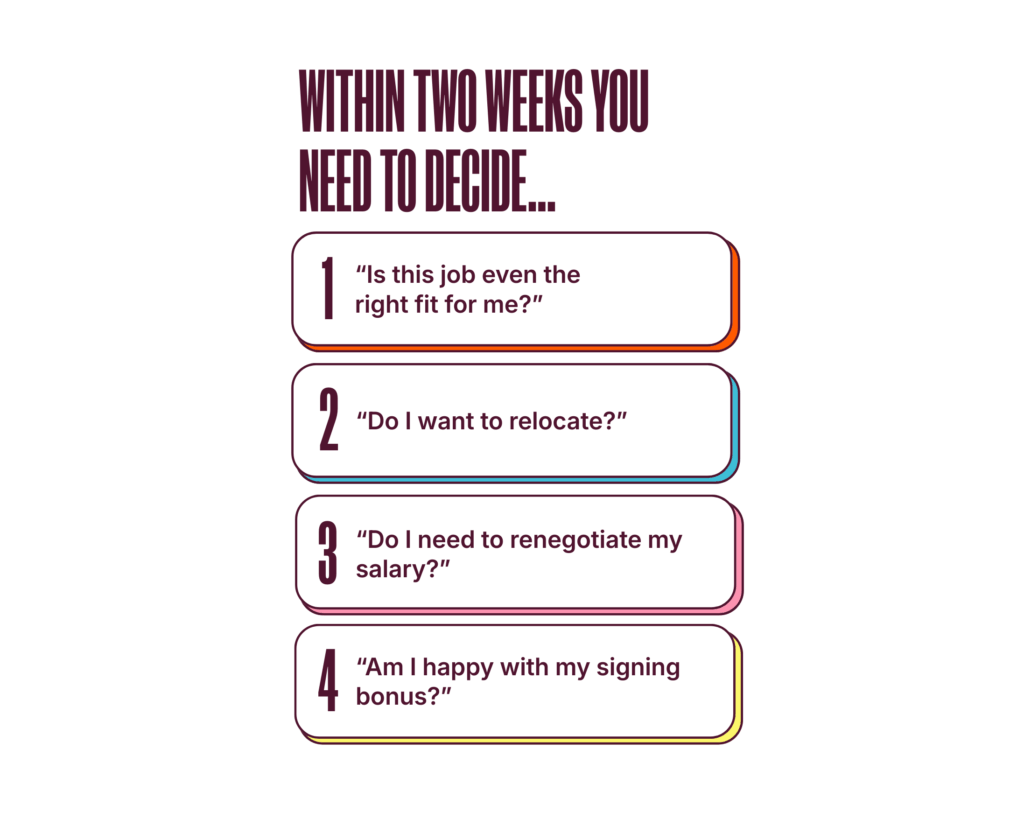
And as if that weren’t enough, tech layoffs are making headlines, students are thinking about the volatility of the market, and AI is becoming more prominent in the workplace.
No wonder renege rates are rising.
Many of our members saw reneging as a survival strategy. When a better offer comes in, they take it because they want to have the best possible life for themselves.
You’re Not Broken, The System Is
Before anything else, give yourself credit for showing up every day in a system that wasn’t built for the amount of pressure it places on students. When you feel overwhelmed, that isn’t a reflection of your ability. It’s a sign that the process needs to change, not that you do.
The system isn’t failing because of you; it’s failing you. We work with our company partners to improve the recruitment cycle because you don’t deserve to face so much stress.
Students can regain control of the recruiting cycle by focusing on a few high-impact, manageable strategies:
- Expand your network beyond your school. Since students from top CS programs have more opportunities, RTC members can close the gap by attending RTC virtual events, attending networking events, or attending partner workshops.
- Use AI to your advantage.
- RTC Members have free access to nSpire, a career-support AI tool featuring:
- Mock behavioral interviews
- Resume optimization with job-specific tailoring
- Cover letter help
- RTC Members have free access to nSpire, a career-support AI tool featuring:
- Track what’s in your control. Separate what’s controllable (resume, portfolio, practice) from what isn’t (timeline, market shifts). It’ll help build confidence and reduce burnout. Mini exercise: “Write down what’s in your control, then cross out the rest. Focus your time on what you can actually move.”
- Focus on quality applications. Research 10–15 top-choice companies deeply and personalize applications rather than casting too wide a net; quality often leads to better outcomes than quantity. Tip: Use company blogs, LinkedIn, and employee stories to align applications with values and mission; it helps you stand out in automated systems. Take a look at our Values-Based Job Search article if you need some help.
- Batch your effort. Set aside dedicated time blocks for applications and prep, rather than letting it spill into every part of the day. Treat it like a course rather than a constant background stressor.
- Leverage RTC tools and community. RTC offers resume reviews with professionals, access to mentors, mock interview practice with nSpire, and community discussions in our Slack channels, so you don’t have to prep alone.
- Recognize diminishing returns. After a certain point, more practice doesn’t equal better results; rest is just as important and productive.
Community is part of how we push back against a system that asks too much of you. You deserve care and clarity while navigating it, and you don’t have to figure it out alone.
Our community has been through it. They’re going through it. Send a message to our #self_care channel when you need some girl talk, or to our #advice channel when you’re comparing compensation packages.
You deserve support, stability, and a path that doesn’t drain you. We’re here to help you find it.
If you’re a member, take a look at our recruiting experience report in teamRTC for more insights into the recruitment cycle.
🔍 Explore the full report in our teamRTC Resource Center (under 2025 Reports)