CS Education
Hot chocolate 😄

What does being a member of Rewriting the Code mean to you?
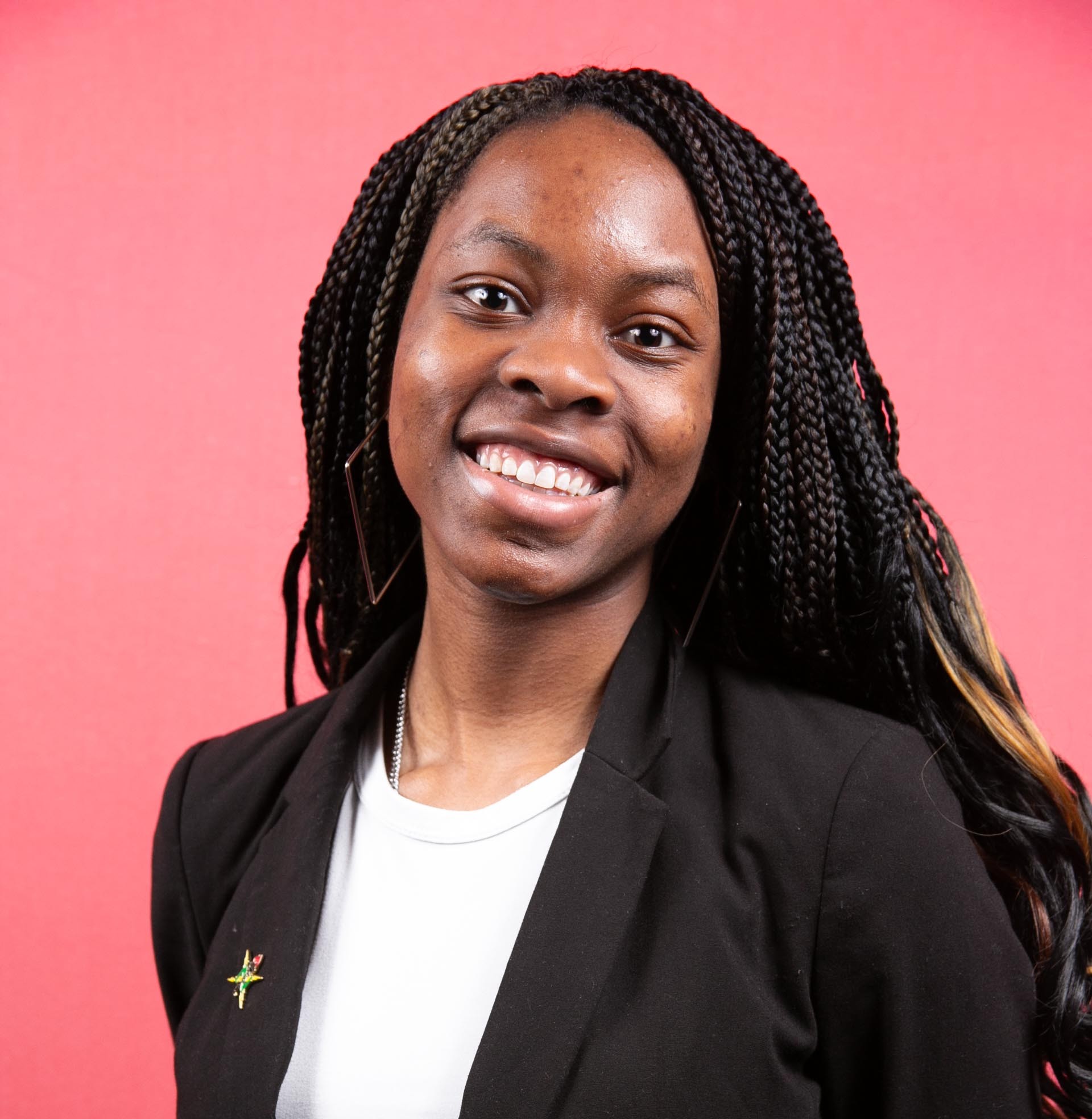
Being a member of Rewriting the Code means being part of a group of cheerleaders who celebrate your presence in the tech space. In many of my computer science classes, I often feel nervous being surrounded by peers who seem like experts, tackling classes I sometimes struggle with as if they were 1-credit electives. The RTC community has made me feel so comfortable sharing feelings of imposter syndrome, exchanging resources I’ve found, and connecting with women around the world who experience the same anxieties but found ways to empower themselves despite the nervous feelings. Knowing I am a part of the RTC network has given me the confidence I’ve taken to many technical challenges I’ve had throughout my college experience.
What inspired you to study both computer science and cognitive psychology, and how do those two lenses shape the way you think about technology?
Originally, I planned to just study computer science in college, since I had years of coding exposure from courses in and out of school and loved math-based logic puzzles. The cognitive psychology addition was a relatively new interest. As a first-generation college student, I didn’t really have much guidance on how to tackle college and The Real World™ besides my older sister, who was my lifeline as she taught me the ropes while on the other side of the Charles River at Harvard. When I was still a senior in high school, whenever my sister would travel back home for the holidays, she would excitedly share what she was learning in her introductory psychology courses. Although I had never taken a psychology course before starting college at Northeastern, my sister shared so many interesting insights to the point that I wanted to follow in her footsteps and study psychology along with computer science in college. Studying both disciplines at the same time opened doors to so many human-centered technical fields, like information technology, organizational psychology, data analytics, and human-computer interaction, and it showed me how much I enjoy solving technical problems while working closely with people across different domains.
What’s a Nigerian dish you love cooking for other people—and why that one?
I love working together with my dad to make a dish called moi moi, which is basically a protein-rich pudding made out of black-eyed peas. One of the coolest parts of moi moi is that you can hide surprises in the pudding. My dad typically hides boiled eggs, but you can hide anything, from fish to meat to shellfish. Not to be poetic or anything, but moi moi kind of mirrors how the tech space has been in recent years. My dad tends to follow a 4-hour strategic process when cooking moi moi, so I tend to be his apprentice, following every task he assigns to me. Even with the relatively strict nature of cooking moi moi, there is room to optimize the process, from picking the seasonings to choosing the containers used to cook the puddings individually. Similarly, though the tech space is grounded in structure and long-established practices, it has room to evolve through iteration and adaptation. I want to learn someday how to refine the moi moi cooking process, rather than simply following instructions, and I hope to bring the same mindset into the workforce when I start working in July.
If your life right now had a video game soundtrack, what would the vibe be?
I really love this question, because for the longest time, I would only listen to video game music (I tend to find it hard to study when I’m listening to music with lyrics). Right now, as classes are starting to ramp up in preparation for midterm season, I am feeling a mix of “Malo Mart” from The Legend of Zelda: Twilight Princess and “NGAHHH!!” by Toby Fox (who coincidentally graduated from Northeastern about a decade ago). Hopefully, when it’s the end of the semester, I hope to blast “Route 209” from Pokémon Diamond in celebration for finishing my degree.
How do you think technology can be designed to feel more human, inclusive, and empowering—especially for marginalized communities?
As I’ll mention in a later question, I think technology can only be more human when people from all backgrounds can bring their perspectives to the table. Although computer science education has expanded significantly since I was in my AP Computer Science A course in my all-girls high school, where there were 4 other women in my class, and one of them was the teacher, there is still limited exposure to the field in so many communities. Growing up in a less economically prosperous household, I was fortunate that my parents sought out affordable programs and scholarship opportunities that allowed me to pursue an interest in STEM and eventually study at Northeastern. I fear that there are many students who do not have access to the same resources, and as a result, never got the chance to discover an interest in computing. I hope future efforts in CS education prioritize outreach to underrepresented communities, so that more diverse perspectives can continue to shape human-centered systems for decades to come.
When you think about “impact,” what does that word mean to you personally—not just professionally?
I like thinking of the word “impact” like the way I think about the Hollywood Walk of Fame. While I have never been to California in my life, I like to imagine that the people who are etched there intentionally built their careers in a way to leave a lasting mark on a shared space. In a less tangible way, making an impact in your community means imprinting values that continue to be shared by others even when transitioning to another chapter of your life. You have the power to inspire people to follow in your footsteps or even build something new as an extension of what you started, kind of like how many generations of stars have drawn inspiration from earlier paths on the Walk of Fame to leave their own stars for generations to come.
What advice would you give to another student who wants to blend technical skills with creativity and social good?
One of the best ways to blend technical skills with social good is to learn how to introduce others to Computer Science. Whether it means being a teacher’s assistant for your peers or a volunteer at a coding workshop for underrepresented students, these kinds of experiences can teach you how to translate technical concepts into human terms while deepening your own technical understanding. If it seems intimidating to pursue these initiatives, just know that you are not alone. This is technically my sixth semester as a teacher’s assistant, and to this day, I still do it scared. It’s a human experience to be a lifelong learner, and mastery is not a prerequisite for teaching what you have learned. Passion can drive you, and a trembling yes speaks volumes more than a silent no.